Meta Description:
Root canal vs extraction explained. Compare costs, pain, recovery, and long-term outcomes to choose the best option for saving your tooth.
Introduction
When severe tooth pain strikes, the dentist often presents two options that can feel equally intimidating: a root canal or tooth extraction. Many people assume extraction is quicker and cheaper, Root Canal vs Extraction while others fear root canals because of outdated myths about pain. The truth is more balanced—and far more important for your long-term oral health.
Understanding the difference between root canal vs extraction can help you make a confident, informed decision. This guide breaks down how each treatment works, when it’s recommended, and what you can expect in terms of comfort, cost, and long-term results.
What Is a Root Canal?
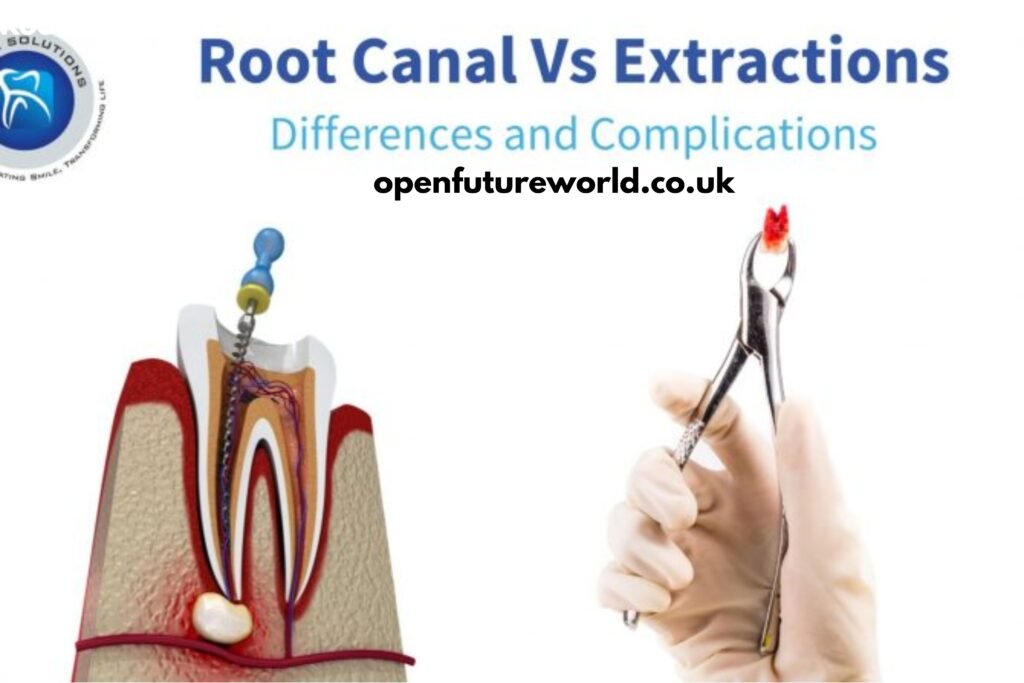
A root canal is a dental procedure designed to save a natural tooth that has become infected or severely decayed. Instead of removing the tooth, the dentist removes the damaged pulp from inside, cleans the area, and seals it to prevent future infection.
How a Root Canal Works
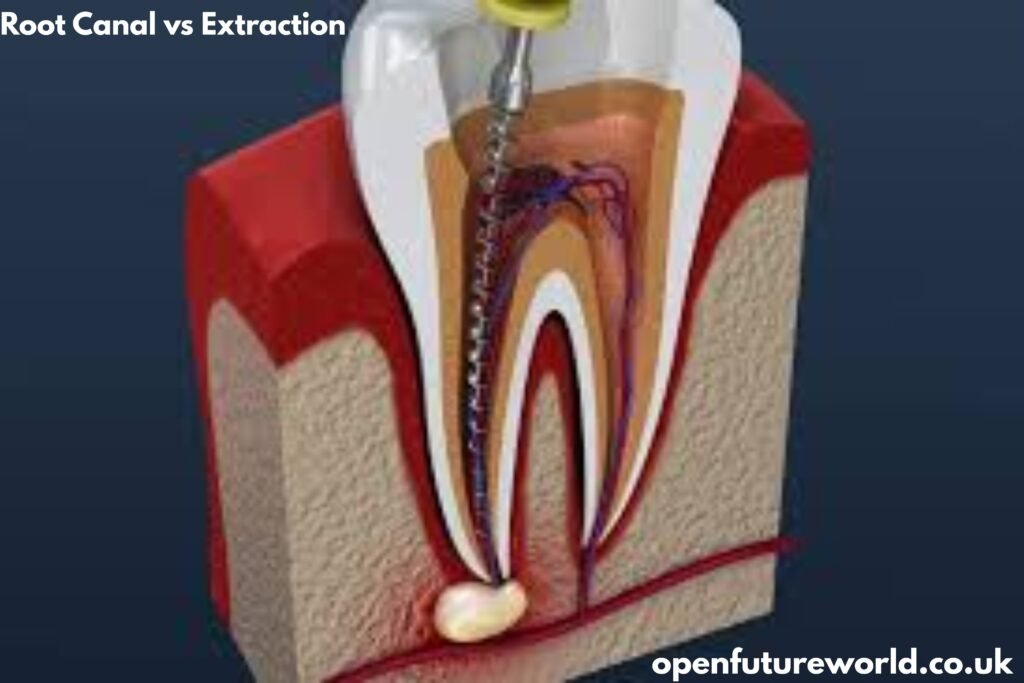
Inside every tooth is soft tissue called pulp, containing nerves and blood vessels. When bacteria reach this pulp—often through deep cavities, cracks, or trauma—it can cause infection and intense pain.
During a root canal, the dentist:
- Removes the infected pulp
- Cleans and disinfects the inner canals
- Fills and seals the tooth
- Restores it with a crown in most cases
Modern root canal treatment is precise and effective, often completed in one or two visits.
What Is Tooth Extraction?
Tooth extraction involves removing the entire tooth from its socket in the jawbone. Dentists recommend extraction when a tooth is too damaged to repair or when keeping it could threaten overall oral health.
Types of Tooth Extraction
There are two main types:
- Simple extraction: Performed on visible teeth using local anesthesia
- Surgical extraction: Required for broken teeth or those below the gum line
After extraction, patients often need a replacement option such as a dental implant, bridge, or partial denture to prevent complications.
Root Canal vs Extraction: Key Differences
Choosing between a root canal and extraction depends on several clinical and personal factors. Understanding the core differences helps clarify which option suits your situation.
Purpose of Treatment
A root canal focuses on preserving the natural tooth, while extraction removes it entirely. Dentists generally prefer saving natural teeth whenever possible because they support proper chewing, speech, root canal vs extraction and jaw alignment.
Pain and Comfort
Many people fear root canals, root canal vs extraction but modern techniques have changed the experience significantly.
- Root canals are usually no more painful than getting a filling
- Extractions may cause more soreness during healing, especially surgical ones
With proper anesthesia, both procedures are manageable, but recovery discomfort is often greater after extraction.
Recovery Time
Root canal recovery is typically quicker. Most patients return to normal activities within a day. Extraction recovery can take several days or even weeks, particularly if bone healing is involved.
Cost Comparison: Root Canal vs Extraction
At first glance, extraction may appear less expensive. However, the long-term costs often tell a different story.
Short-Term Costs
- Root canal treatment generally costs more upfront
- Extraction is usually cheaper initially
Long-Term Costs
After extraction, replacing the missing tooth can significantly increase expenses. Dental implants, root canal vs extraction bridges, or dentures add to the total cost and require additional procedures.
In many cases, a root canal paired with a crown is more cost-effective over time than extraction followed by tooth replacement.
Long-Term Impact on Oral Health
Benefits of Saving a Natural Tooth
Natural teeth are stronger and more functional than artificial replacements. Keeping your original tooth helps:
- Maintain jawbone density
- Prevent shifting of nearby teeth
- Preserve natural bite alignment
Risks of Tooth Loss
When a tooth is extracted and not replaced, root canal vs extraction the surrounding bone may begin to shrink. This bone loss can affect facial structure and make future dental work more complex.
When Is a Root Canal the Better Option?
Dentists usually recommend a root canal when the tooth structure is still salvageable. Common scenarios include:
- Deep cavities reaching the pulp
- Cracked or chipped teeth with infection
- Recurrent infection under an existing crown
In these cases, root canal therapy eliminates pain while keeping the tooth intact.
When Is Extraction Necessary?
Extraction becomes the better choice when saving the tooth is no longer viable. This may include:
- Severe decay below the gum line
- Extensive structural damage
- Advanced gum disease causing tooth instability
Infections that threaten surrounding teeth or bone may also require extraction to protect overall oral health.
Root Canal vs Extraction: A Real-Life Example
Consider a patient with a severely decayed molar causing constant pain. X-rays show the infection has reached the pulp, but the tooth roots are still healthy.
- Root canal option: Pain is relieved, the tooth is saved, and a crown restores function.
- Extraction option: Tooth is removed, followed by bone loss unless a replacement is added.
In most cases like this, dentists recommend a root canal to preserve natural function and avoid future complications.
Success Rates and Longevity
Root canal treatments have a high success rate, often exceeding 90%. With proper care, treated teeth can last a lifetime.
Extractions, while effective at removing infection, require replacements to restore full function. Dental implants are durable but involve surgery, healing time, and higher costs.
Addressing Common Myths
Root Canals Are Extremely Painful
Modern anesthesia and technology make root canals comfortable. The procedure actually relieves pain rather than causing it.
Extraction Solves the Problem Faster
While extraction removes the tooth quickly, the healing process and replacement planning often take longer overall.
How Dentists Decide Between Root Canal and Extraction
Dentists evaluate several factors before recommending treatment:
- Extent of tooth damage
- Gum and bone health
- Patient’s overall health
- Long-term functional goals
The decision is rarely about convenience alone—it’s about protecting your oral health for years to come.
Root Canal vs Extraction: Pros and Cons at a Glance
Root Canal Advantages
- Preserves natural tooth
- Maintains jawbone and bite
- Faster recovery
Extraction Advantages
- Removes severely damaged teeth
- Lower initial cost
- Eliminates infection entirely
Each option has a place, but preservation is often the priority when possible.
Conclusion: Which Option Is Right for You?
The choice between root canal vs extraction depends on the condition of your tooth and your long-term dental goals. Root canals are ideal when a tooth can be saved, offering lasting function and stability. Extractions are sometimes necessary, but they often lead to additional treatments and costs.
If you’re facing this decision, consult your dentist promptly. Early evaluation can mean the difference between saving your natural tooth and losing it. Taking action now protects your smile, comfort, and confidence for the future.
Frequently Asked Questions
Is a root canal safer than extraction?
In many cases, yes. A root canal removes infection while preserving the natural tooth, which supports better long-term oral health.
How long does a root canal-treated tooth last?
With proper care and a crown, a root canal-treated tooth can last decades or even a lifetime.
Does extraction always require tooth replacement?
While not mandatory, replacing an extracted tooth is strongly recommended to prevent bone loss and shifting teeth.
Which is more painful: root canal or extraction?
Most patients report less discomfort during and after a root canal compared to extraction, especially surgical extraction.
Can I delay deciding between root canal and extraction?
Delaying treatment can worsen infection and reduce options. Early treatment improves success rates and outcomes.