Pentagon Big Tech and the Tesla Cybertruck
Introduction:
At first glance, the seem like unrelated topics. One represents national defense, another dominates global innovation, and the third looks like a futuristic pickup truck from a sci-fi movie. Yet in recent years, these three forces have increasingly overlapped.
The U.S. Department of Defense is no longer relying only on traditional contractors. Big Tech companies now play a growing role in defense systems, data analytics, artificial intelligence, and logistics. At the same time, Tesla’s Cybertruck has sparked interest not just among consumers, but also among security analysts, military planners, and infrastructure experts.
This convergence highlights a larger shift: modern defense and national security are being shaped by commercial technology, unconventional design, and rapid innovation cycles.
The Pentagon’s Changing Relationship With Technology
From Traditional Defense Contractors to Silicon Valley
For decades, the Pentagon relied on legacy defense companies to build tanks, jets, and weapons systems. That model is changing fast. Today’s threats are digital, autonomous, and data-driven.
The Pentagon increasingly collaborates with technology companies to gain access to:
- Artificial intelligence for surveillance and analysis
- Cloud computing for secure data storage
- Advanced sensors and autonomous systems
- Cybersecurity tools to protect national infrastructure
Big Tech firms bring speed, scalability, and innovation that traditional defense contractors often struggle to match.
Why Commercial Innovation Matters to Defense
Modern warfare is no longer defined solely by firepower. Information dominance, mobility, and resilience are just as critical. Consumer technology now evolves faster than military hardware, making commercial platforms attractive for adaptation.
This shift allows the Pentagon to:
- Reduce development timelines
- Lower costs through commercial-off-the-shelf solutions
- Rapidly test and deploy emerging technologies
Big Tech’s Expanding Role in National Security
Data, AI, and Cloud Infrastructure
Big Tech companies have become essential partners in defense operations. Their expertise supports:
- Intelligence analysis using machine learning
- Secure cloud systems for classified information
- Predictive logistics and supply chain optimization
Advanced algorithms can process vast amounts of data far faster than human analysts, giving defense agencies a strategic advantage.
Ethical and Political Tensions
Despite the benefits, collaboration between Big Tech and the Pentagon has raised ethical concerns. Employees and advocacy groups often question how their technology is used.
Common debates include:
- The use of AI in autonomous weapons
- Surveillance and privacy concerns
- Corporate responsibility in military operations
These tensions highlight the complex balance between innovation, ethics, and national security.
Tesla’s Cybertruck: More Than a Consumer Vehicle
A Radical Design With Strategic Implications
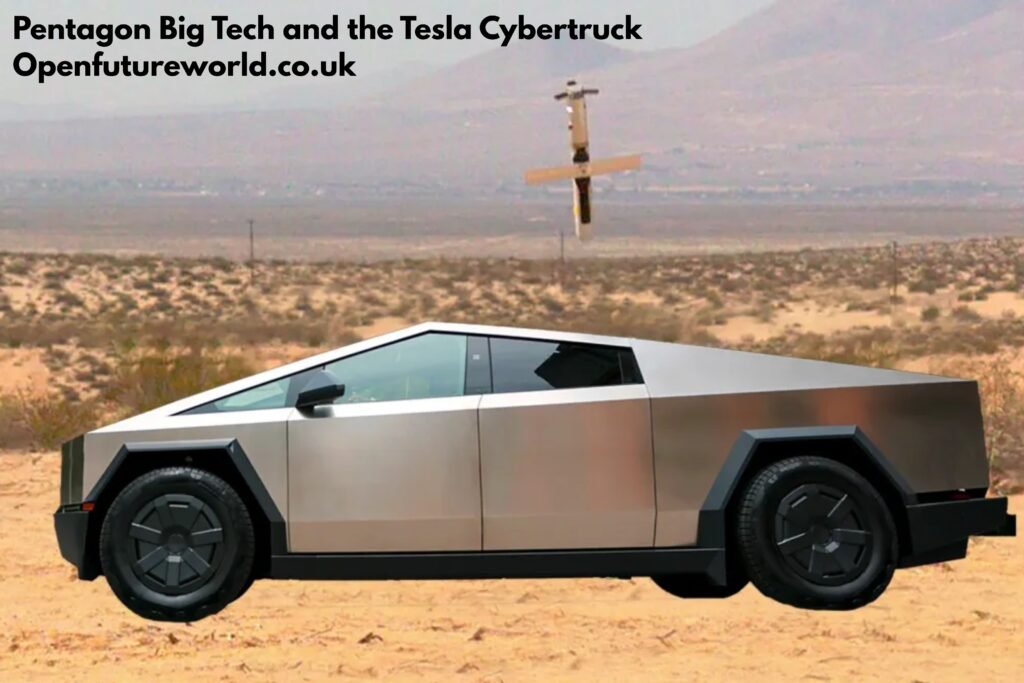
The Tesla Cybertruck broke every design rule in the pickup market. Its angular shape, stainless steel exoskeleton, and electric drivetrain sparked debate—and curiosity.
From a defense and security perspective, the Cybertruck stands out because of:
- High durability and impact resistance
- Electric propulsion with fewer moving parts
- Potential for modular customization
While Tesla has not positioned the Cybertruck as a military vehicle, its features align with some operational needs.
Durability and Material Innovation
The Cybertruck’s stainless steel body is marketed as highly resistant to dents and corrosion. For defense planners, materials like this raise interesting questions about:
- Vehicle survivability in harsh environments
- Reduced maintenance in remote locations
- Long-term durability compared to traditional vehicles
These characteristics are valuable in both civilian and military logistics.
Why the Pentagon Watches Tesla Closely
Electric Vehicles and Military Logistics
Fuel supply is one of the biggest vulnerabilities in military operations. Convoys carrying fuel are expensive and risky.
Electric vehicles offer potential advantages:
- Reduced reliance on fuel supply lines
- Quieter operation for stealth applications
- Integration with renewable energy sources
The Pentagon has already tested electric and hybrid vehicles for base operations and support roles.
The Cybertruck as a Case Study
While the Cybertruck is not designed for combat, it provides insights into:
- How electric platforms perform under heavy loads
- Battery resilience in extreme conditions
- Software-driven vehicle control and diagnostics
These lessons influence how future military vehicles may be designed.
Big Tech, Autonomy, and the Future of Military Mobility
Software-Defined Vehicles
Modern vehicles are increasingly controlled by software. Tesla’s approach treats vehicles more like computers on wheels.
This concept aligns with military trends such as:
- Autonomous convoy systems
- Remote diagnostics and updates
- AI-assisted navigation and threat detection
Software-defined platforms allow rapid upgrades without redesigning hardware.
Lessons From the Consumer Market
Consumer technology often becomes a testing ground for innovations later adapted by defense agencies. Features like:
- Advanced driver assistance
- Over-the-air updates
- Real-time data monitoring
Provide valuable insights into how autonomous systems behave at scale.
Cybersecurity Risks and National Defense
Connected Vehicles as Security Targets
The more connected a vehicle becomes, the more vulnerable it can be. For the Pentagon, cybersecurity is as critical as physical armor.
Key concerns include:
- Protection against hacking and remote control
- Secure communication between vehicles and command systems
- Safeguarding sensitive operational data
Big Tech’s cybersecurity expertise plays a major role in mitigating these risks.
Trust and Verification
When defense systems rely on commercial technology, trust becomes essential. The Pentagon must ensure that:
- Software supply chains are secure
- Updates are verified and controlled
- No hidden vulnerabilities exist
This is why partnerships with technology companies involve extensive testing and oversight.
Real-World Examples of Civilian Tech in Defense
Commercial Drones and Surveillance
Originally designed for photography and recreation, drones are now widely used in military and security operations. This evolution mirrors how consumer tech can rapidly become strategic assets.
Electric Fleets on Military Bases
Several military installations already use electric vehicles for:
- Base transportation
- Maintenance operations
- Logistics within secured areas
These deployments reduce emissions and operating costs while testing performance under controlled conditions.
The Bigger Picture: Innovation, Power, and Responsibility
A New Defense Ecosystem
The intersection of the Pentagon, Big Tech, and vehicles like the Cybertruck reflects a broader transformation. Defense innovation is no longer confined to government labs or traditional contractors.
Instead, it emerges from:
- Startups and tech giants
- Consumer product development
- Cross-industry collaboration
This ecosystem accelerates progress but also demands accountability.
Balancing Speed and Oversight
Rapid innovation can outpace regulation. The challenge is ensuring that new technologies:
- Align with ethical standards
- Enhance security without escalating risks
- Remain transparent and accountable
This balance will define the future of defense technology.
Conclusion: Why This Intersection Matters
The connection between the Pentagon, Big Tech, and the Tesla Cybertruck is not about one vehicle or one company. It represents a shift in how power, technology, and security intersect in the modern world.
As commercial innovation continues to influence defense strategy, the lines between civilian and military technology will blur even further. Understanding this relationship helps policymakers, businesses, and citizens grasp where national security is heading.
If you want to stay informed about how emerging technology shapes defense, mobility, and global power, keep following developments at the intersection of innovation and security.
Frequently Asked Questions
Why is the Pentagon interested in Big Tech companies?
The Pentagon works with Big Tech for access to advanced AI, cloud computing, data analytics, and cybersecurity tools that improve efficiency and decision-making.
Is the Tesla Cybertruck used by the military?
No, the Cybertruck is not a military vehicle. However, its design and technology offer insights into electric vehicle durability and software-driven mobility.
Can electric vehicles really work in military operations?
Electric vehicles are already used for non-combat roles such as base transport and logistics. Their reduced fuel dependency and quiet operation offer strategic benefits.
Does Big Tech influence military strategy?
Big Tech influences how technology is developed and deployed, especially in areas like data analysis, AI, and cybersecurity, which shape modern military strategy.
Are there security risks in using commercial technology for defense?
Yes, connected and software-driven systems introduce cybersecurity risks. That’s why defense agencies apply strict testing, verification, and oversight measures.