Hip Roof vs Gable Roof
Introduction
Choosing the right roof design is one of the most important decisions a homeowner or builder can make. Your roof affects curb appeal, long-term maintenance costs, energy efficiency, and how well your home stands up to weather. Two of the most common and time-tested roof styles are the hip roof and the gable roof.
At first glance, the difference may seem purely visual. In reality, each roof type performs differently depending on climate, budget, architectural style, and structural needs. This in-depth guide breaks down the hip roof vs gable roof debate with practical insights, real-world examples, and clear comparisons to help you make an informed decision.
What Is a Hip Roof?
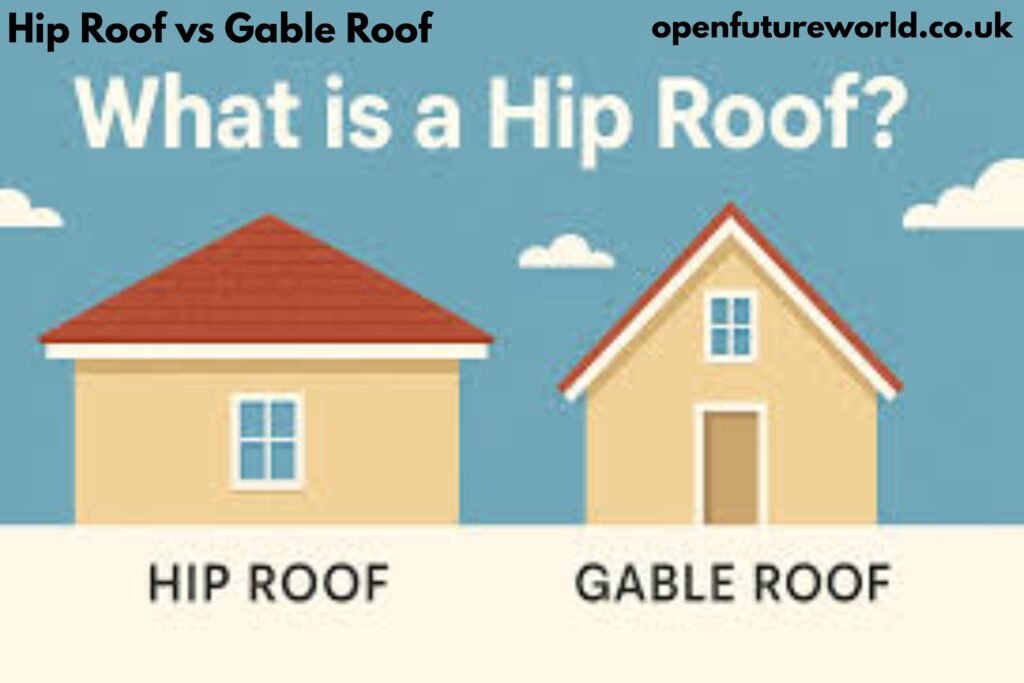
A hip roof is a roof style where all sides slope downward toward the walls, usually at the same angle. There are no vertical ends. Instead, Hip Roof vs Gable Roof the roof forms a ridge at the top and slopes on every side.
Hip roofs are common in areas prone to strong winds, hurricanes, and heavy snowfall because of their aerodynamic shape and balanced structure.
Key Characteristics of a Hip Roof
- Four sloping sides instead of two
- No flat or vertical ends
- Often includes a ridge or a single peak
- Strong structural stability
Because of these features, hip roofs are widely used in modern homes, Hip Roof vs Gable Roof bungalows, and upscale residential construction.
What Is a Gable Roof?
A gable roof is one of the most recognizable roof designs. It has two sloping sides that meet at a ridge, creating a triangular wall section called a gable at each end of the house.
This design is popular for its simplicity, cost-effectiveness, and classic appearance.
Key Characteristics of a Gable Roof
- Two sloping roof panels
- Vertical triangular ends
- Simple structural design
- Excellent water and snow drainage
You’ll see gable roofs on traditional homes, cottages, farmhouses, and many suburban properties.
Structural Differences: Hip Roof vs Gable Roof
From an engineering standpoint, the biggest difference lies in how weight and force are distributed.
A hip roof distributes weight evenly across all four walls. This makes it inherently stable and resistant to twisting forces caused by high winds. A gable roof, on the other hand, concentrates force on the two main walls, which can be a disadvantage in storm-prone regions if not properly reinforced.
Real-Life Example
In coastal areas where hurricanes are common, homes with hip roofs often experience less roof damage compared to gable-roof homes. Insurance companies in some regions even offer lower premiums for hip-roof houses due to reduced wind risk.
Cost Comparison: Which Roof Is More Affordable?
Cost is often a deciding factor when choosing between a hip roof and a gable roof.
Gable Roof Cost
A gable roof is generally less expensive to build. Its simple design requires fewer materials and less labor, making it a budget-friendly option for new construction and renovations.
Hip Roof Cost
A hip roof usually costs 10–25% more than a gable roof. The increased cost comes from:
- More roofing materials
- More complex framing
- Longer construction time
However, this higher upfront cost can be offset by lower maintenance and repair expenses over time, especially in harsh climates.
Weather Performance and Climate Suitability
Wind Resistance
When comparing hip roof vs gable roof in windy conditions, the hip roof clearly has the advantage. Its sloped sides allow wind to flow smoothly over the structure, reducing uplift pressure.
Gable roofs can act like sails in high winds, particularly if the gable ends are not properly braced.
Rain and Snow Handling
Both roof types handle rain effectively, but gable roofs excel at shedding snow quickly due to their steep slopes. This makes them popular in colder regions with heavy snowfall.
Hip roofs also manage snow well but may require stronger framing to support additional load because snow can accumulate more evenly across all sides.
Energy Efficiency and Ventilation
Roof shape plays a major role in airflow and temperature control.
Gable Roof Ventilation
Gable roofs provide excellent natural ventilation. The vertical gable ends make it easy to install vents that allow hot air to escape, improving attic airflow and reducing cooling costs in warm climates.
Hip Roof Ventilation
Ventilating a hip roof can be more challenging. With no vertical ends, airflow relies on ridge vents and soffit vents, which must be carefully designed. When done correctly, hip roofs can still perform well, but poor ventilation can lead to heat buildup.
Attic Space and Interior Use
If you plan to use your attic for storage or living space, roof design matters.
- Gable roofs usually offer more usable attic space due to their open design and higher ceilings.
- Hip roofs tend to have less internal space because of the sloping sides on all four walls.
For homeowners considering attic conversions or vaulted ceilings, gable roofs often provide more flexibility.
Aesthetic Appeal and Architectural Style
The visual impact of your roof should not be underestimated.
Gable Roof Appearance
Gable roofs deliver a classic, timeless look. They work well with traditional architecture and allow for decorative elements like dormers and detailed trim.
Hip Roof Appearance
Hip roofs offer a clean, symmetrical, Hip Roof vs Gable Roof and modern appearance. They are often associated with upscale homes and blend well with contemporary and Mediterranean designs.
Your choice should complement the overall architectural style of your home and neighborhood.
Maintenance and Longevity
Gable Roof Maintenance
Because of fewer joints and ridges, gable roofs are easier to inspect and repair. However, their vertical ends can be more vulnerable to wind and moisture damage if not sealed properly.
Hip Roof Maintenance
Hip roofs have more seams and ridges, Hip Roof vs Gable Roof which means more potential areas for leaks. That said, their structural strength often leads to fewer major repairs caused by storm damage.
In the long run, both roof types can last 20–50 years or more, Hip Roof vs Gable Roof depending on materials and maintenance.
Pros and Cons at a Glance
Hip Roof Advantages
- Excellent wind resistance
- Strong and stable structure
- Modern, polished appearance
- Better performance in extreme weather
Hip Roof Disadvantages
- Higher construction cost
- Less attic space
- More complex ventilation
Gable Roof Advantages
- Lower building cost
- More attic and storage space
- Easy ventilation
- Simple construction and repairs
Gable Roof Disadvantages
- Less wind resistant
- Can suffer damage in storms
- Gable ends need reinforcement
Which Roof Is Better for Your Home?
There is no universal winner in the hip roof vs gable roof comparison. The right choice depends on your priorities.
Choose a hip roof if:
- You live in a high-wind or hurricane-prone area
- Structural strength is your top priority
- You prefer a modern, symmetrical design
Choose a gable roof if:
- You want a cost-effective solution
- You need maximum attic space
- Your climate includes heavy snowfall but low wind risk
Consulting a local architect or roofing professional can help fine-tune your decision based on building codes and environmental conditions.
FAQs: Hip Roof vs Gable Roof
Which roof is stronger, hip or gable?
A hip roof is generally stronger due to its four-sided slope, Hip Roof vs Gable Roof which distributes wind and weight more evenly across the structure.
Is a hip roof more expensive than a gable roof?
Yes, hip roofs usually cost more to build because they require additional materials and more complex framing.
Which roof is better for snowy areas?
Gable roofs are often better in snowy climates because their steep slopes allow snow to slide off more easily.
Do hip roofs last longer than gable roofs?
Both roof types can last equally long if built and maintained properly, Hip Roof vs Gable Roof but hip roofs often experience less storm-related damage.
Can you add solar panels to both roof types?
Yes, both hip and gable roofs can support solar panels, though gable roofs often provide larger uninterrupted surfaces for installation.
Conclusion: Making the Right Roofing Choice
The decision between a hip roof and a gable roof goes far beyond looks. It affects your home’s durability, energy efficiency, interior space, Hip Roof vs Gable Roof and long-term costs. By understanding how each roof performs in real-world conditions, you can choose a design that aligns with your climate, budget, and lifestyle.
If you’re planning a new build or roof replacement, take time to evaluate your priorities and consult experienced professionals. A well-chosen roof is an investment that protects your home and adds value for decades to come.