Business Activity Monitor
Introduction
Running a business today means managing countless moving parts at once. Sales, operations, employees, customers, and finances all generate data every minute. Without a clear system to track this activity, decision-making becomes reactive instead of strategic. That is where a business activity monitor becomes essential.
A business activity monitor provides real-time visibility into how your business operates day by day. It helps leaders understand what is working, what is slowing progress, and where opportunities exist. Whether you manage a startup, a growing company, or an established enterprise, monitoring business activity allows you to stay informed, agile, and competitive.
This guide explains what a business activity monitor is, how it works, and why it plays a critical role in modern business success.
What Is a Business Activity Monitor?
A business activity monitor is a system or software tool designed to track, analyze, and report ongoing business processes and performance indicators. It collects data from multiple sources and presents it in a clear, actionable format, often through dashboards or automated reports.
Unlike traditional reports that show historical data, a business activity monitor focuses on real-time or near-real-time insights. This allows businesses to detect issues early, measure progress accurately, and respond faster to changes.
At its core, a business activity monitor answers three essential questions:
- What is happening right now?
- Why is it happening?
- What should we do next?
Why Business Activity Monitoring Matters
Modern businesses operate in fast-changing environments. Delays, inefficiencies, or missed trends can quickly lead to lost revenue or customer dissatisfaction. Monitoring business activity ensures leaders stay connected to daily operations without micromanaging.
Key benefits include:
- Improved decision-making through accurate, timely data
- Faster response to operational issues
- Better alignment between teams and goals
- Increased transparency across departments
- Stronger performance tracking and accountability
Organizations that actively monitor business activity are more likely to adapt successfully to market shifts and internal challenges.
Core Components of a Business Activity Monitor
Data Collection
A business activity monitor gathers information from various sources such as sales systems, accounting tools, customer platforms, and operational software. This ensures data accuracy and reduces manual reporting.
Key Performance Indicators
KPIs define what success looks like for your business. These metrics vary by industry but often include revenue growth, customer acquisition, order processing time, or employee productivity.
Real-Time Dashboards
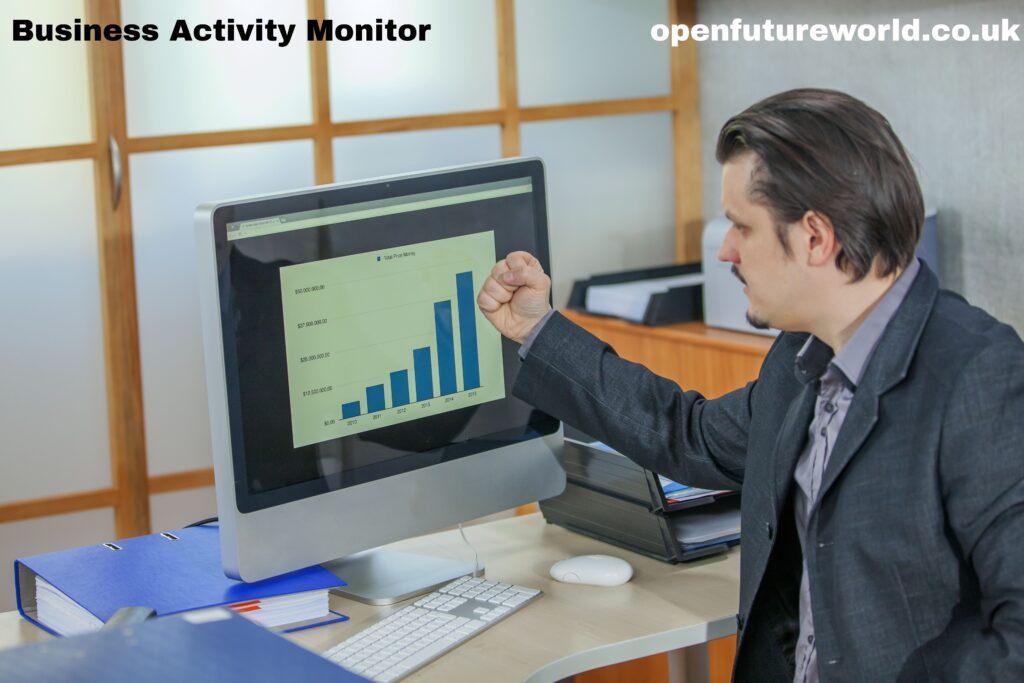
Dashboards transform raw data into visual insights. Charts, graphs, and alerts make it easy to spot trends, anomalies, and performance gaps quickly.
Alerts and Notifications
Automated alerts notify teams when performance thresholds are crossed. This allows immediate action without waiting for weekly or monthly reviews.
How Business Activity Monitoring Improves Decision-Making
Good decisions rely on clear information. A business activity monitor removes guesswork by providing consistent, reliable data across departments.
For example, a retail company tracking inventory activity can identify slow-moving products before they impact cash flow. A service business monitoring customer response times can improve satisfaction by addressing delays instantly.
Instead of reacting to problems after they escalate, businesses can act proactively and strategically.
Real-Life Example of Business Activity Monitoring
Consider a mid-sized logistics company managing daily deliveries across multiple regions. Before implementing a business activity monitor, managers relied on end-of-day reports. Delays were discovered too late to correct.
After introducing real-time activity monitoring, the company tracked delivery status, driver performance, and route efficiency as events occurred. The result was a measurable reduction in delivery delays, improved fuel efficiency, and higher customer satisfaction.
This example highlights how monitoring business activity leads to immediate operational improvements.
Business Activity Monitor vs Traditional Reporting
Traditional reporting focuses on historical data. While useful for analysis, it often fails to support timely decisions.
A business activity monitor offers distinct advantages:
- Real-time insights instead of delayed summaries
- Continuous tracking instead of periodic reviews
- Action-oriented alerts rather than static reports
- Cross-department visibility rather than isolated data
By shifting from static reporting to dynamic monitoring, businesses gain control over performance as it unfolds.
Industries That Benefit Most from Business Activity Monitoring
While almost every organization can benefit, some industries rely heavily on activity monitoring for daily success.
Manufacturing
Monitoring production cycles, machine performance, and supply chains helps reduce downtime and waste.
Retail and E-commerce
Tracking sales activity, inventory movement, and customer behavior improves demand forecasting and customer experience.
Finance and Banking
Real-time monitoring ensures compliance, detects unusual transactions, and supports risk management.
Healthcare
Monitoring patient flow, staff utilization, and service delivery improves care quality and operational efficiency.
Key Metrics Tracked by a Business Activity Monitor
Every business chooses metrics aligned with its goals. Common examples include:
- Sales performance and revenue trends
- Order fulfillment and processing times
- Customer engagement and response rates
- Employee productivity and attendance
- Operational costs and resource usage
The value lies not in tracking everything, but in focusing on metrics that directly influence outcomes.
Implementing a Business Activity Monitor Successfully
Define Clear Objectives
Start by identifying what you want to improve. Whether it is efficiency, profitability, or customer satisfaction, clear goals guide metric selection.
Involve Key Stakeholders
Engage department leaders early. Their input ensures the system reflects real operational needs and gains organization-wide support.
Keep Dashboards Simple
Overloading dashboards with too much data reduces clarity. Focus on actionable insights that encourage quick decisions.
Review and Refine Regularly
Business priorities change. Periodically review monitored activities to ensure they remain relevant and aligned with goals.
Data Accuracy and Trust
A business activity monitor is only as reliable as its data. Ensuring data integrity builds trust among teams and leaders.
Best practices include:
- Automating data collection
- Validating data sources regularly
- Establishing clear data ownership
- Training staff on accurate input
High-quality data supports confident decision-making and long-term planning.
Business Activity Monitoring and Growth
As businesses scale, complexity increases. Manual tracking becomes inefficient and error-prone. A business activity monitor supports growth by standardizing visibility across teams and locations.
Growing companies use activity monitoring to:
- Identify scalable processes
- Detect performance bottlenecks early
- Allocate resources more effectively
- Maintain consistency during expansion
Growth becomes more sustainable when leaders see the full operational picture.
Security and Compliance Considerations
Monitoring business activity often involves sensitive data. Protecting this information is critical for trust and compliance.
Strong systems include:
- Role-based access controls
- Encrypted data handling
- Audit trails for activity tracking
- Compliance with industry regulations
Security is not optional. It is a core component of responsible business monitoring.
The Future of Business Activity Monitoring
Technology continues to evolve. Modern business activity monitors increasingly incorporate automation and predictive analytics.
Future trends include:
- AI-driven insights and forecasting
- Advanced anomaly detection
- Deeper integration across platforms
- More user-friendly visualizations
These advancements will make business monitoring even more proactive and strategic.
Conclusion: Take Control with a Business Activity Monitor
A business activity monitor transforms how organizations operate. It replaces assumptions with evidence and delays with real-time awareness. By tracking what matters most, businesses gain clarity, confidence, and control.
If you want better performance, faster decisions, and sustainable growth, implementing a business activity monitor is no longer optional. It is a strategic necessity.
Now is the time to evaluate your processes, identify key metrics, and start monitoring your business activity with purpose.
Frequently Asked Questions
What is the main purpose of a business activity monitor?
The main purpose is to provide real-time visibility into business operations, enabling faster decisions and improved performance.
Is a business activity monitor suitable for small businesses?
Yes. Small businesses benefit by tracking essential metrics, improving efficiency, and preparing for growth.
How does a business activity monitor improve productivity?
It identifies inefficiencies, highlights performance gaps, and helps teams focus on high-impact activities.
What data does a business activity monitor track?
It tracks operational, financial, customer, and employee activity based on defined business goals.
How often should business activity data be reviewed?
Real-time monitoring runs continuously, while strategic reviews should happen weekly or monthly to guide long-term decisions.