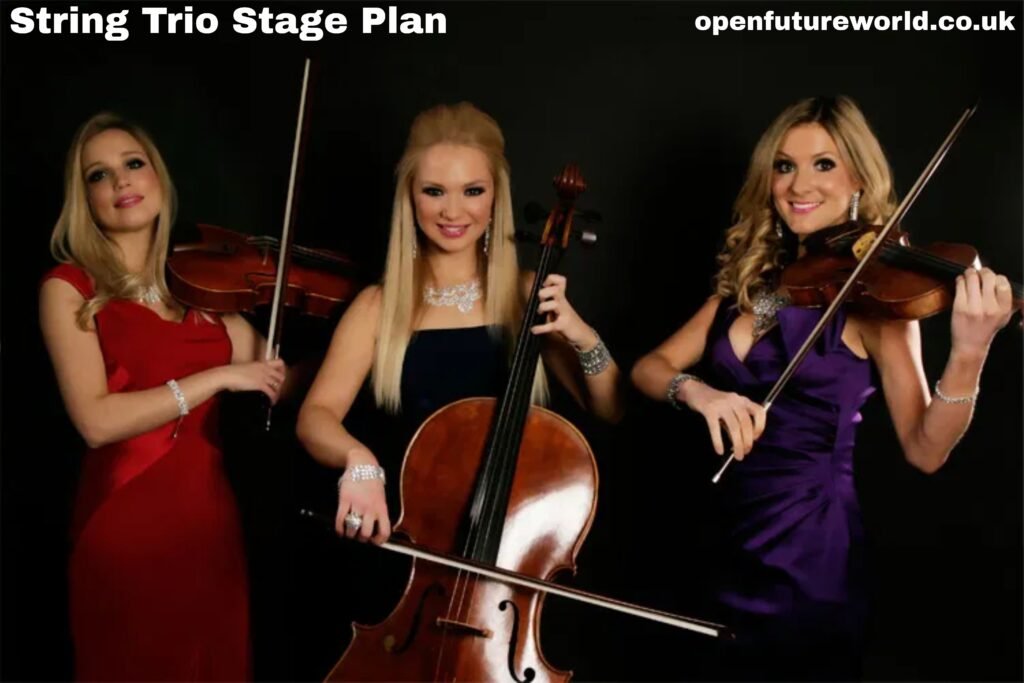
String Trio Stage Plan
Introduction
A string trio may be small in number, but its impact on stage can be powerful when planned correctly. Whether the ensemble is performing at a wedding, concert hall, corporate event, or recital, a well-thought-out string trio stage plan is essential for sound clarity, visual balance, and performer comfort. Many performances fall short not because of musicianship, but due to poor stage arrangement that affects communication, acoustics, and audience experience.
This guide explores how to design an effective string trio stage plan that works in real-world venues. From traditional classical setups to modern amplified stages, you’ll learn how to position musicians, manage space, and adapt layouts to different performance environments.
Why a Proper String Trio Stage Plan Matters
A string trio usually consists of violin, viola, and cello. Each instrument has a unique sound projection, physical size, and role within the ensemble. The way these instruments are positioned directly influences balance, blend, and visual harmony.
A strong stage plan helps:
- Improve ensemble communication and timing
- Ensure balanced sound projection to the audience
- Reduce performer fatigue and distractions
- Create a professional, polished visual appearance
- Adapt quickly to different venue sizes and acoustics
Professional ensembles plan their stage layout as carefully as their repertoire, especially when performing without a conductor.
Understanding the Roles Within a String Trio
Before deciding on placement, it’s important to understand how each instrument functions within the group.
Violin
The violin often carries the melody and needs clear projection. It benefits from a position where subtle articulation can be heard easily by both the audience and fellow musicians.
Viola
The viola bridges harmony and rhythm. Its darker tone blends best when placed close to the violin, allowing inner voices to connect naturally.
Cello
The cello provides depth and rhythmic foundation. Because it projects sound differently and sits on the floor, its placement significantly affects balance.
Knowing these roles helps create a layout that supports musical interaction rather than fighting against it.
Standard String Trio Stage Plan Layouts
There is no single correct arrangement, but several proven layouts work well across most performance settings.
Traditional Semi-Circle Layout
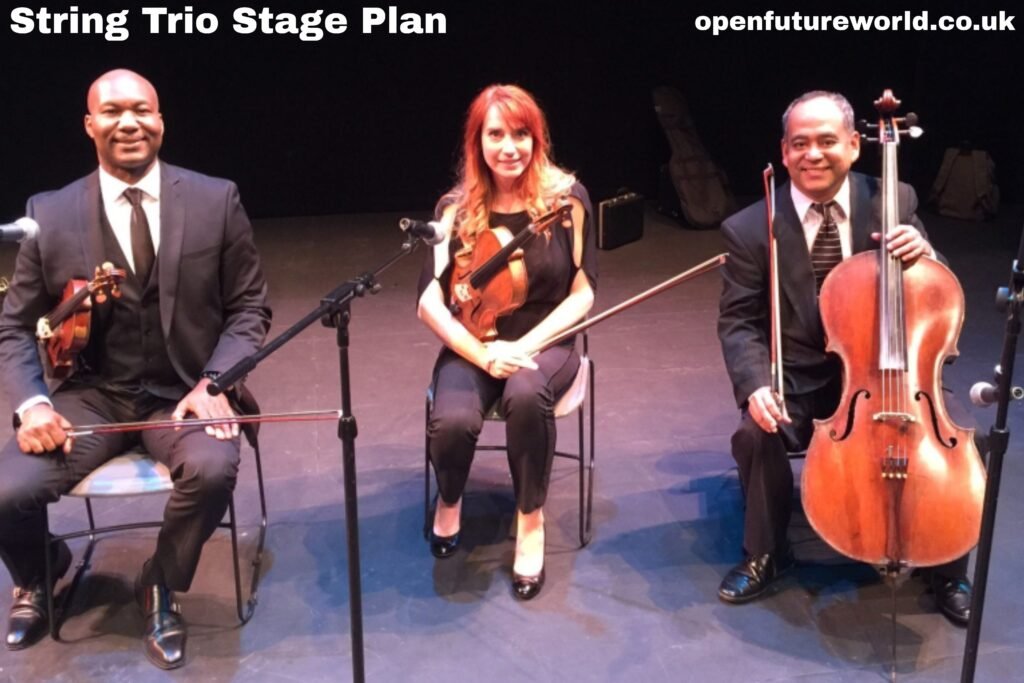
This is the most commonly used string trio stage plan for classical performances.
- Violin on audience left
- Viola in the center
- Cello on audience right
The musicians face slightly inward, forming a gentle arc. This allows:
- Clear eye contact
- Natural acoustic blend
- Equal distance between players
This setup works exceptionally well in recital halls, churches, and acoustic venues.
Straight-Line Layout for Small Stages
When space is limited, a straight-line arrangement can be effective.
- Violin on one side
- Viola in the middle
- Cello on the opposite side
Chairs are aligned evenly, and music stands are adjusted to avoid blocking sightlines. This layout is common at weddings, restaurants, and intimate events.
Key considerations:
- Keep players close enough for communication
- Angle chairs slightly inward
- Ensure cello does not overpower the others
Triangular Layout for Visual Impact
For performances where visuals matter as much as sound, a triangular formation works well.
- Violin slightly forward
- Viola slightly behind on one side
- Cello slightly behind on the other side
This creates depth on stage and enhances audience engagement. It’s often used for showcase performances, promotional events, string trio stage plan and chamber concerts with lighting design.
String Trio Stage Plan for Amplified Performances
Modern events often require amplification, especially in outdoor or large venues. Amplification changes how stage planning should be approached.
Microphone Placement Considerations
Each instrument usually needs its own microphone. Placement should support the stage layout rather than disrupt it.
- Violin and viola microphones placed slightly above instrument level
- Cello microphone positioned lower, angled toward the bridge
- Cables taped down to avoid hazards
Spacing between musicians should allow for mic stands without crowding.
Monitoring and Speaker Placement
Poor monitor placement can cause feedback and distract musicians.
Best practices include:
- Avoid placing monitors directly in front of microphones
- Keep stage volume low
- Position speakers ahead of the trio, not behind them
A clean string trio stage plan ensures amplification enhances, rather than replaces, natural sound.
Adapting the Stage Plan to Different Venues
No two venues are the same. A flexible approach is essential.
Concert Halls and Recital Spaces
These spaces are designed for acoustic instruments. Use minimal amplification or none at all.
- Wider spacing for natural resonance
- Semi-circle or arc layout
- Chairs aligned evenly for visual symmetry
Weddings and Event Venues
Aesthetic matters greatly in these settings.
- Compact setup to avoid obstructing décor
- Neutral-colored chairs and stands
- Clear sightlines for guests and photographers
The trio is often placed to the side of the main event, so the stage plan should be unobtrusive yet elegant.
Outdoor Performances
Outdoor environments require extra planning.
- Closer positioning to compensate for sound dispersion
- Secure chairs and stands against wind
- Use amplification strategically
In outdoor settings, communication between musicians becomes even more critical, making inward-facing layouts especially useful.
Practical Tips for Performer Comfort and Efficiency
A good string trio stage plan considers the musicians, not just the audience.
Helpful tips include:
- Allow enough space for bow movement
- Ensure chairs are height-adjustable
- Position music stands slightly to the side, not directly in front
- Keep lighting angled to avoid glare on sheet music
Comfort leads to better focus, which leads to better performances.
Real-Life Example: Wedding String Trio Setup
At a typical indoor wedding ceremony, space is often limited, and setup time is short.
A practical approach:
- Straight-line or shallow arc formation
- Violin closest to the aisle for melodic clarity
- Cello positioned slightly back to control bass projection
This setup allows the trio to perform prelude music, processional pieces, and recessional music smoothly without rearranging mid-event.
Common Mistakes to Avoid in a String Trio Stage Plan
Even experienced performers can overlook small details.
Avoid these common issues:
- Placing the cello too far forward, overpowering the group
- Blocking sightlines with tall music stands
- Spacing musicians too far apart
- Ignoring lighting and floor surface issues
A quick stage check before the audience arrives can prevent most of these problems.
Enhancing Visual Appeal Without Compromising Sound
Audiences don’t just listen; they watch.
To improve visual appeal:
- Align chairs evenly
- Use consistent stand heights
- Face musicians slightly toward each other
- Avoid clutter on stage
A clean, balanced stage plan builds trust and professionalism in the eyes of the audience.
Conclusion: Build a String Trio Stage Plan That Serves the Music
A thoughtful string trio stage plan does more than organize chairs and stands. It supports musical communication, enhances sound quality, and creates a professional presence that audiences appreciate. Whether performing in an elegant concert hall or a casual outdoor event, adapting the stage layout to the environment is key to success.
By understanding instrument roles, venue requirements, and performer needs, you can create a setup that allows the music to shine. Take the time to plan your stage arrangement before every performance, and the results will be heard and seen.
Call to Action:
Before your next performance, review your stage layout carefully. Small adjustments can make a big difference in sound, comfort, and audience connection.
FAQs About String Trio Stage Plans
What is the best stage layout for a string trio?
A semi-circle layout with violin, viola, and cello facing inward is widely considered the most effective for balance and communication.
How much space does a string trio need on stage?
A minimum of 8 to 10 feet wide is usually sufficient, but more space allows better sound projection and comfort.
Should a string trio use amplification indoors?
In most small to medium indoor venues, amplification is unnecessary. Larger halls or noisy environments may require minimal amplification.
Where should the cello be placed on stage?
The cello is typically placed on audience right or slightly back to prevent overpowering the violin and viola.
Can a string trio change its stage plan during an event?
Yes, but it’s best to plan ahead. Minor adjustments are possible, but frequent changes can disrupt performance flow.